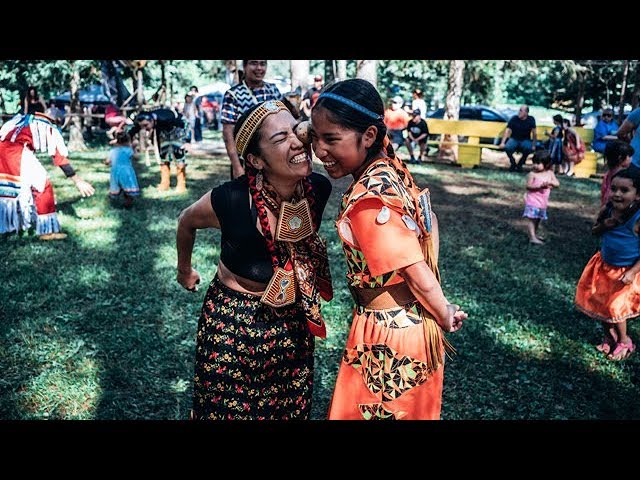
INDIGENOUS CULTURE ESL LESSON DESCRIPTION
OBJECTIVE & OVERVIEW
This indigenous culture ESL lesson plan provides activities, PDF worksheets, and digital materials designed for intermediate B1 – B2 students. In this lesson, students will:
Discuss and explore the topic of ‘powwows’
Discuss some topics related to indigenous culture
Watch a new report video about powwows and how they are celebrated
Study and use the passive voice in question formation
Have in-depth conversations about other cultural events
PREVIEW & DISCUSSION
In this indigenous culture ESL lesson, students start by exploring images related to powwows. They engage in a discussion to predict what a powwow might be. They answer questions about powwows, the activities that occur, the participants, and the typical times and places for such events. They then shift focus to indigenous culture. They discuss what “indigenous” means and consider symbols, attire, and traditions associated with it. Students also examine their own cultural contexts. In the final preview activity, students match adjectives with nouns and use these matched phrases to describe the powwow images..
VIEWING ACTIVITY
During the viewing activity, students watch a video about powwows. It provides detailed information on their significance, types, and various activities. In the first activity, students write short answers about powwows. They then match sentence halves related to different powwow dances. Students also complete sentences about powwow attire, focusing on the specifics of ceremonial dress, the materials used, and cultural etiquette associated with it.
DISCUSSION & GRAMMAR
Following the video, students discuss several reflective questions about powwows. They also share any experiences with similar cultural events in their local areas or countries. Students move on to analyze passive voice sentences from the video. They answer questions about the use of the passive voice and convert these statements into questions. Additionally, they practice creating passive voice questions based on provided sentences and discuss the structures used.
CULTURAL EVENT & DISCOVERY WORKSHOP
For the cultural event discovery and workshop, students are divided into pairs or small groups to create and discuss their own cultural event. They start by writing down a cultural event of their choice, which can be real or imaginary. Students then ask each other questions about their chosen events, focusing on various aspects like attire, competitions, and activities. They are encouraged to use the passive voice in some of their questions. After the discussions, they reflect on similarities and differences between the events, what they found interesting, and their experience with using the passive voice.
Alternatively, students may discuss various topics related to cultural events and engage in discussions about their own experiences, interests, and perspectives on cultural events.
BENEFITS OF USING THIS INDIGENOUS CULTURE ESL LESSON
Cultural Awareness:
This lesson can improve students’ understanding and appreciation of indigenous cultures. This promotes global cultural awareness.
Authentic Content:
Since the lesson uses authentic video material, it can be effective in improving listening skills and maintaining student interest.
Enhanced Speaking Skills:
There are plenty of speaking opportunities in the lesson, through group discussions and the cultural events workshop. This promotes meaningful conversations among students.
Personal Connection:
This lesson helps students relate personally to the material by comparing cultural events. As a result, it can make their learning experience more relevant.
Grammar Practice:
Students get to practice forming the passive voice in questions. This can help them in a variety of situations in which they’d ask questions using the passive voice.
VIDEO DESCRIPTION
What do you know about ‘powwows’? Come discover this fascinating cultural event celebrated by indigenous cultures of North America.
LESSON ACTIVITIES
- SPEAKING: Indigenous Culture, Powwows, Cultural Events
- VIEWING: Short Answers, Matching Activity, Gap-fill Listening
- VOCABULARY: Images, Adjective + Noun Collocations
- GRAMMAR: Question Formation (Passive Voice)
- ADDITIONAL: Cultural Events Discovery Workshop, Quiz & Review, Lesson Reflection
LESSON TOPICS
Indigenous Culture, Powwows, Cultural Events