LESSON OVERVIEW
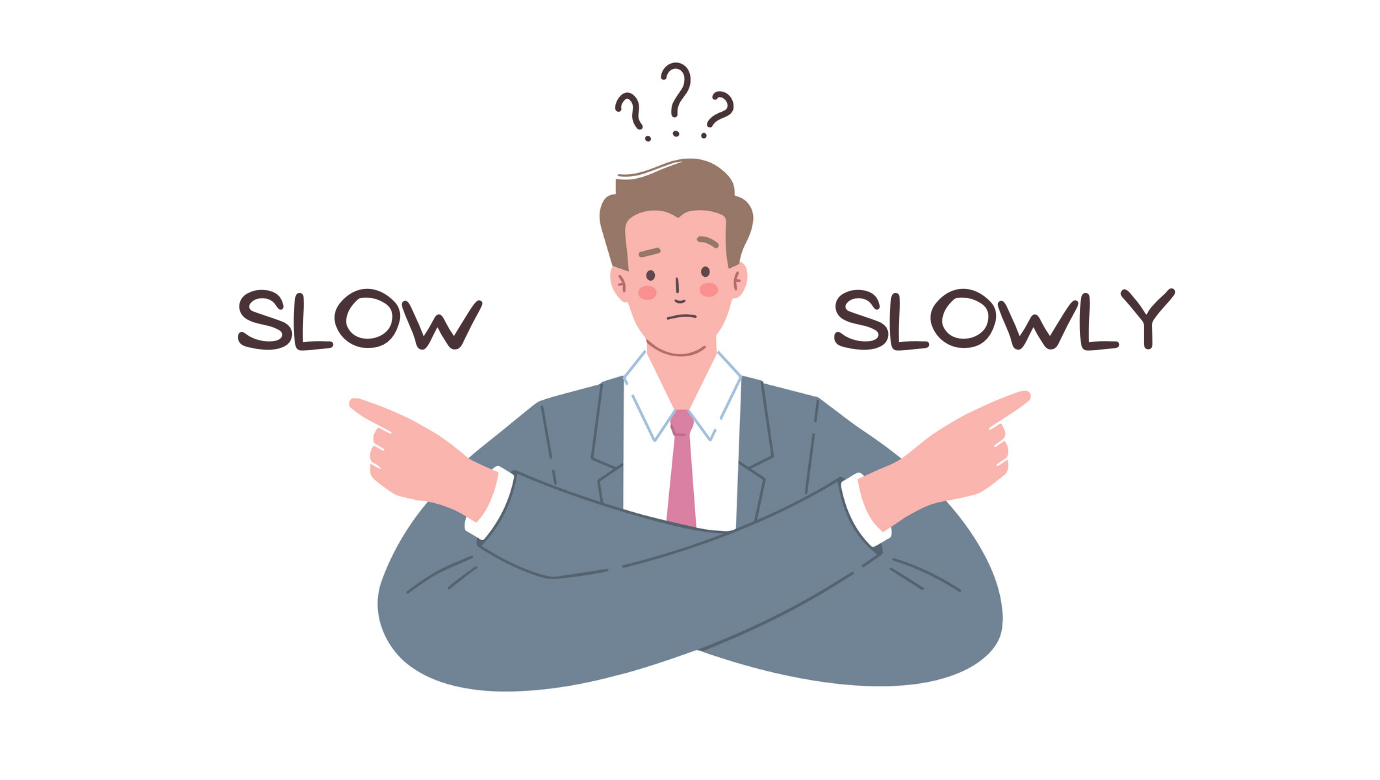
In this lesson students learn the difference between adjectives and adverbs and learn how to create adverbs of manner. They also practise their use in several controlled and free activities.
ADJECTIVES & ADVERBS OF MANNER
The lesson starts with a warm-up task in which students compare two photos and say five things which are true for both of them (e.g. The people are sitting.). Then, they read four sentences and decide which photos they refer to. They also need to explain their choices. In the next activity, students learn the difference between adjectives and adverbs and identify these parts of speech in the sentences from the previous exercise. They also work out the rule for creating regular adverbs of manner (e.g. loud – loudly). After that, students complete a table with adjectives and adverbs. Some of the adverbs in the table are regular and some are irregular (e.g. kind – kindly, good – well).
CONTROLLED AND FREE PRACTICE
In this part of the lesson students get the chance to practise the use of adverbs of manner and adjectives. The first activity contains eight gapped sentences. Students decide if each of them requires the use of an adjective or an adverb. They then complete the gaps with appropriate words from the table they filled in before. In the next activity, students read eight statements containing adjectives and adverbs. Their task is to decide whether they are true for them or not (e.g. On Saturdays, I eat breakfast fast., I am honest when I speak to my boss.). Finally, students look at six photos with speech bubbles and write what the people are saying. They have to use an adjective or an adverb of manner in each of the photos.